
Nicotine replacement therapy (NRT): quick tips
Last updated September 2025
Read time 5 minutes
Your queries answered with our quick guide to using nicotine replacement therapy (NRT).
Can I keep using NRT if I've had a couple of cigarettes?
Unless you’ve gone back to smoking your regular number of cigarettes, don’t stop using NRT. It’s safe to keep using NRT to help you quit.
How long do I use NRT?
It’s important to keep using NRT while you work on ways to manage your triggers to smoke or vape, with support from Quitline (13 7848). This can take many weeks. It’s recommended that you use NRT for at least eight weeks.
Talk to your doctor or pharmacist about the length of time that would be best for you.
Can I use NRT while I eat or drink?
It’s best not to eat or drink while using any of the faster-acting types, and for a few minutes after. These include the mouth spray, gum and lozenge.
Don’t have acidic foods and drinks such as coffee, soft drink and juice for 15 minutes before using faster-acting types of NRT. These can affect absorption of nicotine through the mouth.
Do I just wait for a craving before using faster-acting NRT?
NRT doesn’t give you the same fast ‘hit’ of nicotine as a cigarette. When possible, you should use a faster-acting type of NRT before you go into a situation that you expect will trigger cravings.
Why do I have hiccups?
Hiccups may be a sign that you’re using the faster-acting types of NRT the wrong way. You may be swallowing the nicotine rather than letting it get absorbed in your mouth. Chew the gum then park it between your gum and cheek, gently move that lozenge around the mouth and make sure the mouth spray is used under the tongue or on the inside of the cheek. More information on how to use each type of NRT can be found here.
I’m using the nicotine mouth spray. Why does my throat hurt?
It’s important to spray the mouth spray under the tongue or into the side of your cheek (not into the back of your throat). More information on how to use the mouth spray.
Why is my skin itchy where I put the nicotine patch?
It’s important to move the patch to a new place on your body each day. You can put it anywhere on your upper arms, chest or back. More information on how to use the patch.
Using two types of NRT together (a nicotine patch and a faster-acting type) is called combination therapy. Most people who smoke have a better chance of success if they use combination therapy. Talk to your doctor or pharmacist to see if combination therapy is suitable for you.
I'd like to read more about each type of NRT
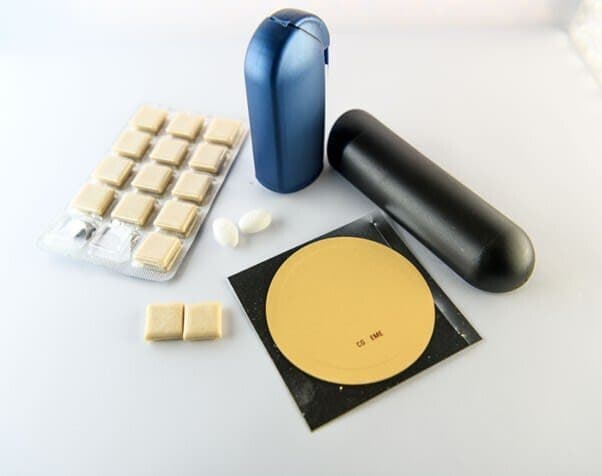
We have a separate page on each type of NRT: patches, mouth spray, gum and lozenge. We also have a page on combination therapy: patches plus mouth spray, gum or lozenge. Combination therapy together with support from Quitline is one of the most effective ways to stop smoking.
Looking for information on nicotine inhalators? Nicotine inhalators (also known as nicotine inhalers) were discontinued by manufacturers and are no longer available. Alternative faster-acting types of NRT include the mouth spray, gum and lozenges.
I'd like to talk to someone about NRT
Your doctor or pharmacist are best to advise you on your use of NRT. Our Quitline counsellors can give general advice and support to ensure you are using it correctly.
Contact Quitline
Speak directly with a trained quit specialist. Our counsellors are available to provide immediate support, personalised quit plans, and answer all your questions.
Get in contact with Quit


Share this page
Share this page
Tags
- How to quit
- Staying quit
- Smoking