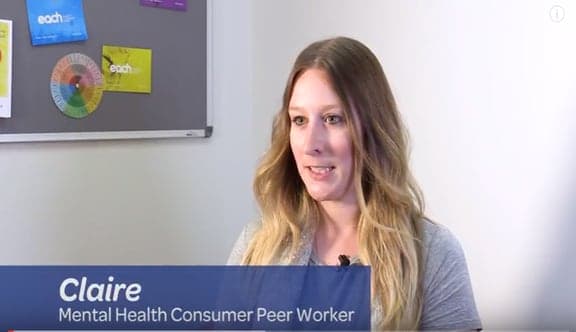
How counselling can help you quit smoking or vaping
Last updated September 2026
Read time 3 minutes
Counsellors can use cognitive behavioural therapy to help you quit
You may know all the reasons why you should quit smoking or vaping. But quitting and staying quit can feel really difficult. This is where counselling can help you.
What is cognitive behavioural therapy (CBT)?
CBT is a type of counselling that can help you change your thinking to change your behaviour.
CBT is based on the idea that your thoughts affect your feelings and how you behave. Counsellors can help you understand and reflect on the way you think, so you can better cope with situations that you find difficult.
CBT can help you quit a nicotine addiction
CBT can help people cope with a wide range of mental health issues, such as depression, anxiety, and addiction. [1]-3 Although it’s helpful for people with mental health conditions, it can also be used by people who wish to change their behaviour, such as smoking or vaping.4
One of the most effective ways to quit a nicotine addiction is using counselling like CBT as well as quitting medicines.5
How does CBT help people to quit?
Your thoughts can be very powerful. Unhelpful thoughts can lead to negative feelings and harmful or risky behaviours. For example, the thought 'I can't cope without a cigarette' can lead to feelings of hopelessness, powerlessness and anxiety. These thoughts and feelings can trigger cravings to smoke.
CBT can help you learn to replace these unhelpful thoughts with more realistic ones. When you change your thinking, you can change how you feel and what you choose to do.
When it comes to smoking or vaping you may have the thought ‘I am so stressed right now, I just need a smoke’. This thought can lead to feeling like you have no choice but to reach for a cigarette. By contrast, the thought 'there are lots of times when I've coped without a cigarette' can lead to more hopeful and confident feelings that you can cope with this urge.
During CBT counselling, you’ll be asked open-ended questions such as “is there another way to look at this?” This can lead to new thoughts and feelings. For example:
New thought: “Smoking feels OK for a moment, but it can hurt my health. There are better ways to cope.”
New feeling: Stronger and more in control.
New action: Try deep breathing, exercise, or another healthy habit instead.
Counsellors, psychologists and social workers can help you quit using elements of CBT. It can be offered in individual therapy sessions, or in groups. In a counselling session, they will assess your smoking or vaping habits, talk about your goals for quitting and help you to manage tricky times such as when you have a craving, during stressful times or when socialising. They are very skilled at helping you to understand your habits without judging you.
The goal of counselling is to help you learn to apply these new thoughts in real life. Then when you are stressed or triggered to smoke or vape, you can cope with the stress without feeling the need to smoke.
You can also try CBT by yourself
You can start to use some of the ideas from CBT now even before starting counselling.
Paying attention to your own thoughts, feelings, behaviour cycles can be helpful when trying to quit. You can think about what triggers your urge to smoke or vape? What thoughts did you have about the trigger ? Also, what emotions did you have? See the example below:
Trigger: having a break at work is a habitual trigger for you.
Thoughts: “I have had enough, I deserve this break”.
Emotions: stressed, tired, overwhelmed.
By doing this exercise you might discover that you are triggered when work is stressful, when you are with certain friends or when you are bored and lonely. This is important information on your quitting journey as it can help you to understand what to avoid, and what skills you might need to develop to handle those situations.
Noticing this interaction can be very helpful when quitting. When we know that we can change habits by changing either thoughts, feelings or behaviours (with tactical strategies), this offers many options on your quitting journey.
Who can offer counselling for quitting smoking or vaping?
Individual or group sessions with psychologists, counsellors or social workers who have the training to provide counselling.
Doctors (GPs) can refer you to counselling services and recommend psychologists. Your doctor can complete a Mental Health Treatment Plan that allow you to receive partial rebates for up to 10 sessions of psychological therapy under Medicare in a calendar year.
Quitline counsellors use a range of tools to help you quit, including CBT principles. Quitline is a free and confidential service. There are many ways to contact Quitline including by phone (13 7848), webchat, WhatsApp and Messenger. Ask Quitline to call you back for free at quit.org.au/callback. Visit quit.org.au/quitline.
Online courses. Some online courses offer CBT to help people quit smoking or vaping and offer an accessible, cost-effective alternative to traditional face-to-face treatment.



Contact Quitline
Speak directly with a trained quit specialist. Our counsellors are available to provide immediate support, personalised quit plans, and answer all your questions.
Get in contact with QuitShare this page
Share this page
Tags
- How to quit